
Flammable & Hazardous Material Storage Guide | Safety Cabinets & Cans
Introduction to Flammable & Hazardous Material Storage
Storing flammable, combustible, and corrosive materials safely is critical to preventing accidents and ensuring workplace compliance with OSHA and NFPA standards. From safety cabinets designed for specific hazards to safety cans for smaller quantities, this guide explores essential storage solutions for hazardous materials.
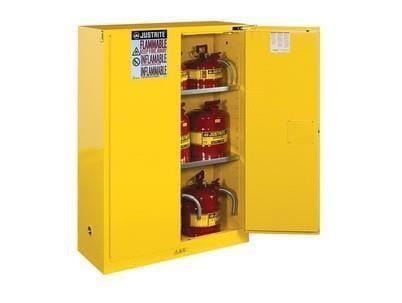
1. Safety Cabinets for Flammables
- Function: Store flammable liquids like gasoline, acetone, and alcohol.
- Features:
- Double-Walled Steel Construction: Provides fire resistance.
- Ventilation Options: Optional vents to reduce vapor buildup.
- Spill Containment: Leak-proof sump to contain spills.
- Applications:
- Laboratories, manufacturing facilities, and workshops.
- Benefits:
- Reduces fire risks.
- Complies with OSHA 29 CFR 1910.106 and NFPA 30.
Keywords: flammable safety cabinets, OSHA-compliant storage
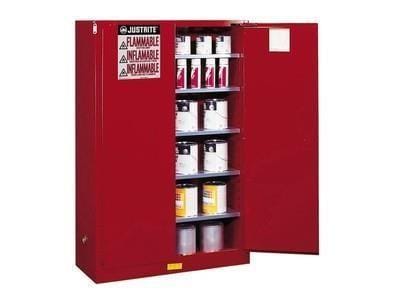
2. Safety Cabinets for Combustibles
- Function: Store combustible materials like paper, wood, and certain chemicals.
- Features:
- Fire-Rated Construction: Withstands high temperatures.
- Self-Closing Doors: Automatically close in case of fire.
- Labeling: Clear hazard warnings for safety.
- Applications:
- Warehouses, printing facilities, and chemical storage areas.
- Benefits:
- Prevents fire spread.
- Organizes materials for easy access.
Keywords: combustible safety cabinets, fire-rated storage
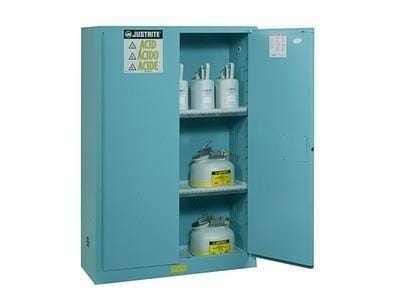
3. Safety Cabinets for Corrosives in Labs
- Function: Store acids, bases, and other corrosive substances.
- Features:
- Chemical-Resistant Materials: Polyethylene or coated steel.
- Ventilation: Prevents harmful fume accumulation.
- Spill Trays: Contains leaks and spills.
- Applications:
- Laboratories, industrial plants, and schools.
- Benefits:
- Protects workers from chemical exposure.
- Complies with OSHA 29 CFR 1910.1450.
Keywords: corrosive safety cabinets, chemical storage solutions
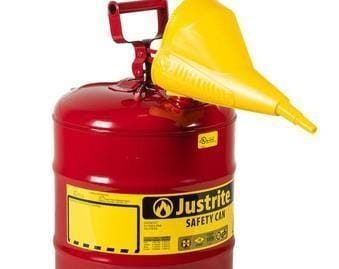
4. Safety Cans: Portable and Secure Storage
- Function: Store and dispense small quantities of flammable liquids.
- Types:
- Type I: Single opening for filling and pouring.
- Type II: Separate openings for filling and pouring.
- Features:
- Flame Arrestors: Prevent ignition of vapors.
- Self-Closing Lids: Automatically seal to contain spills.
- Applications:
- Workshops, garages, and construction sites.
- Benefits:
- Reduces spill and fire risks.
- Easy to transport and use.
Keywords: safety cans, flammable liquid storage
Comparison Table: Hazardous Material Storage Solutions
| Storage Type | Materials Stored | Key Features |
|---|---|---|
| Flammable Cabinets | Gasoline, acetone, alcohol | Fire-resistant, spill containment |
| Combustible Cabinets | Paper, wood, certain chemicals | Fire-rated, self-closing doors |
| Corrosive Cabinets | Acids, bases | Chemical-resistant, ventilated |
| Safety Cans | Small quantities of flammables | Flame arrestors, self-closing lids |
How to Choose the Right Storage Solution
- Material Type: Match the cabinet or can to the specific hazard (flammable, combustible, corrosive).
- Capacity: Choose cabinets or cans based on the volume of materials stored.
- Compliance: Ensure OSHA, NFPA, and local fire code compliance.
- Ventilation: Opt for ventilated cabinets in areas with poor airflow.
Benefits of Proper Hazardous Material Storage
- Safety: Reduces fire, explosion, and chemical exposure risks.
- Compliance: Meets OSHA and NFPA regulations.
- Organization: Keeps workspaces tidy and efficient.
FAQ Section
Q: Can I store flammables and combustibles in the same cabinet?
A: No—flammables and combustibles require separate, designated cabinets.
Q: Do corrosive cabinets need ventilation?
A: Yes, ventilation prevents harmful fume buildup and ensures safety.
Q: What’s the difference between Type I and Type II safety cans?
A: Type I has one opening; Type II has separate openings for filling and pouring.
Q: How often should safety cabinets be inspected?
A: Inspect cabinets and cans monthly for damage or leaks.
Conclusion
From flammable safety cabinets to corrosive storage solutions, proper hazardous material storage is essential for workplace safety and compliance. Invest in high-quality cabinets and cans to protect your team and facilities.
Upgrade your hazardous material storage today—where safety meets compliance!
 English
  العربية